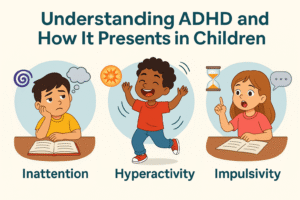
Attention-Deficit/Hyperactivity Disorder (ADHD) is one of the most common neurodevelopmental conditions in childhood. Despite its prevalence, ADHD is often misunderstood, misdiagnosed, or overlooked — especially in children who don’t fit the stereotypical image of someone with the condition.
Let’s take a deep dive into what ADHD is, how it shows up in kids, and how we as parents, teachers, and caregivers can offer the best support possible. 💬❤️
What is ADHD? 🤔
ADHD is a neurodevelopmental disorder that affects a person’s ability to regulate attention, impulsivity, and activity levels. It typically begins in childhood and can continue into adulthood. ADHD is NOT caused by bad parenting or lack of discipline — it’s a brain-based condition linked to differences in how certain areas of the brain develop and function.
There are three main types of ADHD, according to the Diagnostic and Statistical Manual of Mental Disorders (DSM-5):
- Predominantly Inattentive Presentation (formerly known as ADD)
- Predominantly Hyperactive-Impulsive Presentation
- Combined Presentation (a mix of both)
Each type presents differently, and symptoms can vary from child to child. No two children with ADHD look exactly the same!
Core Symptoms of ADHD in Children 🧒🏽👧🏼
Let’s explore the three categories of symptoms more closely:
1. Inattention 🌀
Children with inattention may:
- Seem like they’re not listening, even when spoken to directly 🙉
- Have difficulty organising tasks and activities
- Make careless mistakes in schoolwork or homework ✏️
- Be easily distracted by unrelated stimuli
- Lose items necessary for tasks (e.g., pencils, toys, books)
- Struggle to follow through on instructions or finish tasks
This isn’t about laziness or defiance — their brains simply have trouble filtering out distractions or sustaining attention.
2. Hyperactivity 🕺🏽💥
Signs of hyperactivity include:
- Fidgeting with hands or feet, or squirming in their seat
- Getting up when it’s not appropriate (e.g., during class)
- Running or climbing excessively, even when it’s not safe
- Talking excessively or blurting out answers
- Being constantly “on the go,” as if driven by a motor
Hyperactivity is more than just being energetic — it’s a level of movement that feels difficult or impossible to control.
3. Impulsivity ⚡
Impulsive behaviours might look like:
- Interrupting others or speaking out of turn
- Struggling to wait their turn in games or conversations
- Making snap decisions without thinking about consequences
- Acting in risky or dangerous ways (e.g., running into the street)
Impulsivity isn’t about being rude — it’s about the child’s brain having difficulty with inhibition and self-control.
What ADHD Looks Like in Real Life 🎭
Many kids can be forgetful, fidgety, or overly talkative from time to time. But for children with ADHD, these behaviours:
- Are persistent, lasting at least six months
- Happen in multiple settings (home, school, social situations)
- Interfere with their daily functioning
Example Scenarios:
- A 7-year-old boy is constantly getting in trouble at school for leaving his seat and talking out of turn. His teacher says he’s “disruptive,” but he truly struggles to sit still. 🧍♂️➡️🪑
- A 9-year-old girl is daydreaming in class, missing instructions, and forgetting her homework. She’s quiet, so her challenges go unnoticed. 🌥️📚
- A 6-year-old constantly interrupts conversations and gets upset when they’re asked to wait their turn. It leads to frequent meltdowns. 🗣️⏳
The Emotional Side of ADHD ❤️🩹
ADHD doesn’t just impact behaviour — it also affects emotions.
Children with ADHD might experience:
- Low self-esteem from frequent criticism or failure
- Frustration when they can’t meet expectations
- Anxiety from trying to “hold it together” all day
- Anger when they feel misunderstood
These emotional challenges are not separate from ADHD — they’re deeply intertwined. Children often know they’re struggling and want to do better, but their brains make it incredibly hard.
ADHD and Co-Occurring Conditions ⚠️
ADHD often doesn’t exist in isolation. Many children also experience:
- Learning disorders (e.g., dyslexia, dyscalculia)
- Anxiety or depression
- Oppositional Defiant Disorder (ODD)
- Sensory Processing Difficulties
- Autism Spectrum Disorder (ASD)
Identifying and addressing all aspects of a child’s profile is key to providing effective support. 🧩
How is ADHD Diagnosed? 🧾
Diagnosis isn’t as simple as a quick test. It involves a comprehensive evaluation that may include:
- Parent and teacher questionnaires
- Clinical interviews
- Observations
- Cognitive or psychological testing
Typically, a paediatrician, psychologist, or psychiatrist makes the diagnosis. Early identification can make a huge difference in a child’s development and self-esteem.
Supporting a Child with ADHD 🌈
Helping a child with ADHD means focusing on understanding, patience, structure, and support. Here are some powerful strategies:
1. Create Clear Routines 🗓️
Children with ADHD thrive on predictable routines. Use visual schedules, reminders, and step-by-step instructions to help them stay on track.
2. Break Tasks Into Smaller Steps ✂️
Big tasks can feel overwhelming. Break them into bite-sized pieces and offer encouragement after each step.
3. Offer Frequent Feedback and Praise 🌟
Positive reinforcement goes a long way. Focus on effort, not just results. Celebrate even small successes!
4. Provide Movement Breaks 🏃
Kids with hyperactivity need to move. Let them run, stretch, or bounce — even short breaks can reset their focus.
5. Use Tools and Supports ✏️⏰
Timers, fidget tools, noise-canceling headphones, and checklists can make life easier for everyone.
6. Be Compassionate — Not Punitive ❤️
Children with ADHD are not misbehaving. Punishment without understanding only adds shame. Instead, use teaching moments and compassionate boundaries.
ADHD in Girls: Often Missed or Misunderstood 🚺
ADHD in girls often presents differently than in boys — and that leads to underdiagnosis.
Girls are more likely to:
- Be inattentive rather than hyperactive
- Mask their symptoms by trying to please others
- Experience internalised struggles like anxiety or perfectionism
As a result, their ADHD may not be recognised until adolescence or adulthood. Raising awareness of these patterns is crucial. 🔍
The Power of Early Intervention ⚡
With the right support, children with ADHD can thrive. Early intervention can:
- Improve academic performance
- Reduce possible behaviour problems
- Boost self-confidence
- Support emotional regulation
Therapies may include:
- Behavioural therapy
- Parent training
- Medication (e.g., stimulants or non-stimulants)
- Social skills training
Every child’s needs are different — there’s no one-size-fits-all solution.
Celebrating the Strengths of Children with ADHD ✨
Children with ADHD are not broken — their brains just work differently. And with those differences come strengths, such as:
- Creativity and outside-the-box thinking
- High energy and enthusiasm
- Curiosity and a love of learning
- Hyperfocus on subjects that excite them
- Resilience in the face of challenges
When we nurture these strengths and provide support where it’s needed, those with ADHD can shine brightly. 🌟
Final Thoughts: See the Child, Not Just the Diagnosis 👁️🗨️
Understanding ADHD is about more than spotting symptoms — it’s about seeing the whole child. With the right knowledge and compassion, we can create environments where those with ADHD don’t just survive — they thrive.
If you suspect your child might have ADHD, or you’re navigating a new diagnosis, know that you’re not alone. There’s a community of parents, professionals, and educators ready to help you and your child on this journey.
Let’s work together to build a world where neurodiversity is understood, accepted, and celebrated. 🌍